
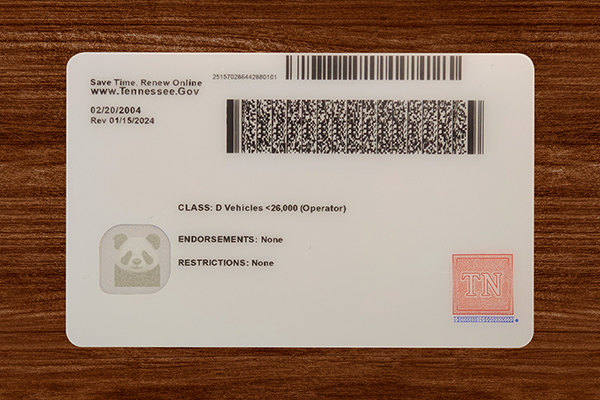
Scannable IDs have become a common topic in recent years. Many people have questions about what they are, how they work, and why businesses use scanners to verify identification cards.
This guide explains the technology behind scannable IDs in simple language. Whether you are curious about barcode technology, security features, or how ID verification works, this article provides an easy-to-understand overview.
If you want to learn more about premium-quality identification cards and the technology used in modern cards, you can also explore our Premium Scannable IDs resource for additional information.
What Is a Scannable ID?
A scannable ID is an identification card that contains a machine-readable barcode or magnetic strip. When someone scans the card using a compatible scanner, the scanner reads the encoded information.
Common information stored inside the barcode may include:
- Full name
- Date of birth
- Address
- License number
- Issue date
- Expiration date
The barcode simply stores digital information. It does not connect to a hidden database by itself. The scanner only reads the information that has already been encoded into the barcode.
How Do Scannable IDs Work?
The process is straightforward.
Step 1: Barcode Creation
Information is converted into a digital barcode during the card production process.
Step 2: Scanning
A barcode scanner or verification device reads the barcode within seconds.
Step 3: Information Display
The scanner displays the stored information on its screen.
This allows businesses to read the encoded data quickly without typing everything manually.
What Type of Barcode Is Used?
Most modern driver’s licenses use a PDF417 barcode.
The PDF417 barcode can store much more information than a traditional barcode found on retail products.
Advantages include:
- Large data capacity
- Fast scanning
- Error correction
- High reliability
- Industry-standard format
Because of these features, PDF417 has become the preferred barcode format for many government-issued identification cards.
Why Do Businesses Scan IDs?
Businesses scan IDs for several practical reasons.
Age Verification
Stores that sell age-restricted products often scan identification cards to confirm a customer’s age quickly.
Identity Verification
Hotels, rental companies, and various service providers may use scanners to verify customer information during registration.
Faster Customer Service
Scanning reduces manual data entry, saving time for both employees and customers.
Reduced Typing Errors
Manual typing can lead to mistakes. Barcode scanning helps improve accuracy.
Common Security Features Found on Modern IDs
Modern identification cards include multiple security features to help protect against tampering and counterfeiting.
Some common features include:
Holograms
Reflective images that change when viewed from different angles.
UV Printing
Hidden graphics become visible only under ultraviolet light.
Microprinting
Very small text that is difficult to reproduce accurately.
Ghost Images
A smaller secondary photograph printed on the card.
Laser Engraving
Permanent markings placed inside the card material.
Raised Text
Certain areas feel slightly elevated when touched.
Machine-Readable Barcode
Stores digital information for compatible scanners.
These security features work together to improve verification.
Are All IDs Scannable?
No.
Many older identification cards may not contain modern machine-readable barcodes.
Today, however, most driver’s licenses and state identification cards include a scannable barcode as part of their standard design.
What Information Can a Scanner Read?
A barcode scanner typically reads only the information encoded in the barcode.
Examples include:
- Name
- Address
- Birth date
- Gender
- License number
- Card expiration date
- Issue date
The exact information depends on how the issuing authority formats the barcode.
Scannable IDs vs Standard IDs
| Feature | Standard ID | Scannable ID |
|---|---|---|
| Printed Information | Yes | Yes |
| Barcode | Sometimes | Yes |
| Machine Readable | Limited | Yes |
| Faster Verification | No | Yes |
| Digital Data Storage | Limited | Yes |
The biggest difference is the barcode that allows compatible scanners to read information electronically.
Benefits of Barcode Technology
Barcode technology offers several advantages.
Quick Processing
Scanning usually takes only a few seconds.
Improved Accuracy
Digital reading reduces typing mistakes.
Better Customer Experience
Shorter waiting times create a smoother experience.
Consistent Information
The barcode stores information in a standard format that scanners can interpret consistently.
Can Barcode Information Be Updated?
Generally, no.
Once the barcode has been created, its information remains fixed until a new card is issued with updated data.
For example, if someone changes their address, a replacement card is typically required.
How Is Barcode Data Protected?
Modern barcode standards include error correction methods that help scanners read information even if the barcode has small scratches or minor damage.
In addition, many identification cards use multiple physical security features alongside the barcode to improve overall reliability.
Why Are Scannable IDs Becoming More Common?
Technology continues to improve every year.
Many organizations prefer barcode verification because it offers:
- Faster transactions
- Better efficiency
- Reduced manual work
- Improved consistency
- Easier record management
As digital verification systems continue to evolve, machine-readable identification remains an important part of many verification processes.
Frequently Asked Questions
What is a scannable ID?
A scannable ID is an identification card that contains a machine-readable barcode that compatible scanners can read.
What barcode do driver’s licenses use?
Most modern driver’s licenses use the PDF417 barcode format.
Can every scanner read every ID?
Not always. Scanner compatibility depends on the barcode format and the device being used.
Is barcode scanning faster than manual entry?
Yes. Barcode scanning usually takes only a few seconds and helps reduce typing errors.
Why do businesses use ID scanners?
Businesses commonly use scanners for age verification, customer registration, identity verification, and improved efficiency.
Conclusion
Scannable IDs combine printed information with machine-readable barcode technology to make identification faster and more accurate. Modern cards also include several security features, such as holograms, UV printing, microprinting, and laser engraving, to improve verification and help protect the integrity of the card.
Understanding how barcode technology works allows individuals and businesses to better appreciate the role of modern identification systems. If you’d like to learn more about the technology and features associated with premium-quality ID cards, visit the Premium Scannable IDs page on IDLord for additional educational information.
