
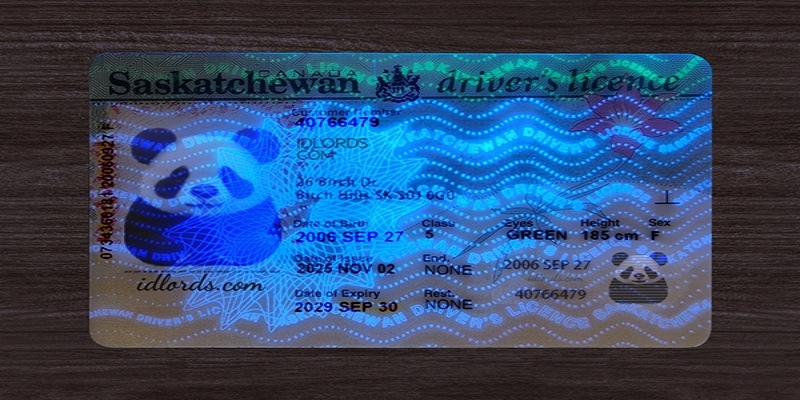
Modern driving licenses are much more than simple identification cards. They now include multiple layers of advanced security technologies that help protect against counterfeiting, identity theft, and document fraud. Governments around the world continue to upgrade license designs with sophisticated features that make them difficult to duplicate while allowing authorities to verify authenticity quickly.
Whether you are curious about how driving licenses are protected or simply want to understand the technology behind them, learning about these security features provides valuable insight into modern document protection.
In this guide, we’ll explore the most common security features found on today’s driving licenses, explain how they work, and discuss why they are essential for maintaining secure identification systems.
Why Security Features Matter on Driving Licenses
A driver’s license serves multiple purposes. Besides authorizing someone to operate a vehicle, it also acts as an official proof of identity in many everyday situations.
Without strong security measures, licenses would be easier to counterfeit, making identity fraud significantly more common. Modern security features help governments, businesses, and law enforcement agencies quickly distinguish authentic documents from altered or counterfeit ones.
Some major benefits include:
- Preventing identity fraud
- Reducing document forgery
- Improving public trust
- Supporting digital verification
- Protecting personal information
- Making inspections faster and more accurate
As technology advances, counterfeiters also become more sophisticated. This constant challenge encourages licensing authorities to adopt increasingly advanced security solutions.
Layers of Security Used in Modern Driving Licenses
Modern licenses rarely rely on a single security feature. Instead, they combine multiple technologies that work together.
These layers generally include:
- Visible security elements
- Hidden security elements
- Machine-readable components
- Digital authentication features
- Specialized printing technologies
- Durable construction materials
Using multiple layers ensures that even if one feature is copied, many others remain difficult or nearly impossible to reproduce accurately.
Holographic Overlays
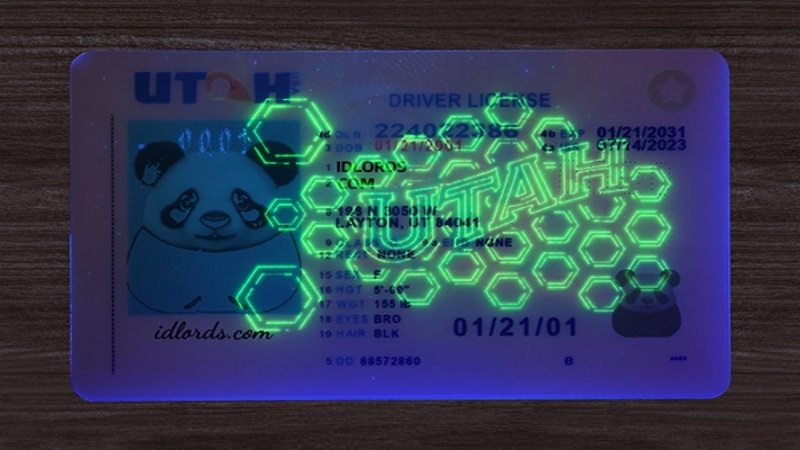
One of the most recognizable security features is the holographic overlay.
Holograms display changing colors, symbols, or images depending on the viewing angle. Unlike ordinary printed graphics, holograms are produced using specialized manufacturing processes that require advanced equipment.
Benefits include:
- Difficult to duplicate
- Easy for inspectors to recognize
- Visible without special tools
- Resistant to tampering
Many jurisdictions incorporate official emblems, state seals, or repeating holographic patterns across the entire card.
Microprinting Technology
Microprinting consists of extremely small text that appears as a thin line to the naked eye but becomes readable under magnification.
Counterfeit printing equipment often cannot reproduce this level of detail, making microprinting an excellent anti-forgery measure.
Common uses include:
- Repeated state names
- Department names
- Security phrases
- License identifiers
When copied or scanned using ordinary printers, the tiny letters often blur together, making counterfeit documents easier to detect.
Laser Engraving
Laser engraving permanently embeds personal information into the card material rather than simply printing it on the surface.
Information commonly engraved includes:
- Full name
- Date of birth
- License number
- Signature
- Portrait photograph
Because the data is burned into the polycarbonate layers, removing or altering it without damaging the card is extremely difficult.
Laser engraving also improves durability, allowing licenses to withstand years of daily use.
Ghost Images
Many modern driving licenses feature a smaller duplicate photograph known as a ghost image.
This secondary image serves as an additional verification point.
If someone attempts to replace the main photo, the ghost image usually remains unchanged, making alterations much easier to detect.
Ghost images also increase confidence during visual inspections.
Ultraviolet (UV) Security Printing
Certain graphics, patterns, or text remain invisible under normal lighting but become visible under ultraviolet light.
These hidden elements are commonly used during official inspections.
Examples include:
- State symbols
- Logos
- Security patterns
- Hidden serial numbers
- Decorative backgrounds
Because UV inks require specialized production methods, they add another effective layer of protection against counterfeit reproduction.
Optical Variable Ink (OVI)
Optical Variable Ink changes color depending on the viewing angle.
For example, a printed emblem might appear green when viewed directly but shift to purple when tilted.
This technology provides:
- Instant visual verification
- Strong anti-counterfeit protection
- Easy inspection without specialized equipment
Many government-issued documents around the world use similar color-shifting inks because they are extremely difficult to imitate accurately.
Fine Line Background Patterns
At first glance, the background artwork on a driving license may seem decorative. In reality, these intricate geometric designs play a major role in document security.
These fine line patterns, often called guilloché patterns, are created using specialized software and precision printing techniques. They contain complex curves, waves, and overlapping lines that standard printers cannot easily reproduce.
If someone attempts to scan or photocopy the license, these detailed patterns often become distorted or blurred, making counterfeit copies easier to identify.
Raised Tactile Elements
Many modern licenses include raised printing or tactile features that can be felt by touch.
These elements may include:
- License numbers
- Official seals
- Symbols
- Text
- Borders
The textured surface provides another quick way for officials to verify authenticity without relying solely on visual inspection.
Because tactile printing requires specialized manufacturing equipment, it adds another obstacle for counterfeiters.
Machine-Readable Barcodes
Most modern driving licenses include one-dimensional or two-dimensional barcodes that store encoded information.
These barcodes can contain details such as:
- License number
- Name
- Date of birth
- Expiration date
- Issuing authority
When scanned with authorized systems, the encoded information can be compared against the printed details on the card. Any mismatch may indicate tampering or unauthorized alterations.
Barcodes also improve efficiency by allowing faster identity verification during traffic stops, airport security checks, and administrative processes.
QR Codes for Digital Verification

Some jurisdictions have begun incorporating QR codes into driving licenses to support secure digital verification.
Unlike standard barcodes, QR codes can store larger amounts of encrypted data and may connect to secure verification systems used by authorized agencies.
Potential advantages include:
- Faster verification
- Reduced manual data entry
- Enhanced digital authentication
- Improved fraud detection
- Better integration with electronic record systems
As digital identity solutions continue to evolve, QR codes are expected to play an increasingly important role in modern document security.
RFID and NFC Technology
Some modern driving licenses include Radio Frequency Identification (RFID) or Near Field Communication (NFC) technology. These embedded chips allow secure electronic communication between the card and authorized readers.
While not every country has adopted this technology, it offers several advantages:
- Faster identity verification
- Secure digital authentication
- Reduced risk of manual errors
- Enhanced protection against document fraud
- Improved compatibility with digital government services
To protect users’ privacy, these chips often use encryption and require authorized equipment to access stored information.
Polycarbonate Card Construction
Unlike older plastic cards made from PVC, many modern driving licenses are manufactured using polycarbonate.
Polycarbonate is highly durable and allows multiple layers of security features to be fused together during production rather than glued onto the surface.
Benefits include:
- Greater resistance to wear and tear
- Longer lifespan
- Protection against peeling and delamination
- Improved laser engraving quality
- Better resistance to tampering
Because the layers are permanently bonded, separating or replacing information becomes extremely difficult.
Transparent Windows
Many newly designed licenses feature transparent windows integrated into the card.
These windows may contain:
- Laser-engraved images
- Holographic elements
- Official symbols
- Security text
- Micro-images
Transparent windows are extremely challenging to reproduce using standard printing equipment, making them one of the strongest modern anti-counterfeiting measures.
Color-Shifting Security Elements
Modern licenses frequently include security elements that change appearance depending on lighting conditions.
These features may involve:
- Color-shifting graphics
- Metallic inks
- Reflective strips
- Optical effects
Inspectors can often verify authenticity simply by tilting the card under normal lighting.
Because these technologies require specialized manufacturing equipment, counterfeit versions rarely duplicate the same visual effects accurately.
Multiple Portrait Images
Many jurisdictions now include more than one photograph on a driving license.
A modern card may contain:
- Primary portrait
- Ghost image
- Laser-engraved portrait
- Transparent window portrait
Using multiple images makes identity substitution significantly more difficult. Even if someone attempts to alter one photograph, the remaining images provide additional points of comparison.
Security Lamination
The protective laminate covering many licenses serves more than a cosmetic purpose.
Modern laminates often contain:
- Embedded holograms
- Hidden text
- UV-reactive graphics
- Custom patterns
- Official logos
Attempting to peel away or replace the laminate usually causes visible damage, making tampering easier to detect.
Digital Signature Verification
Some modern licensing systems incorporate digital signatures that verify whether the information stored electronically has been altered.
These cryptographic methods help ensure that:
- Data remains authentic
- Information cannot be modified without authorization
- Verification systems detect alterations immediately
As governments continue digitizing identification documents, digital signatures are becoming increasingly valuable.
Embedded Serial Numbers
Every driving license contains a unique identification number, but many modern cards also include hidden or repeated serial numbers throughout the design.
These identifiers may appear in:
- Machine-readable zones
- Microprinting
- UV graphics
- Laser engraving
- Internal production records
This redundancy helps authorities verify authenticity and trace document production.
Security Features Working Together
The true strength of a modern driving license lies not in any single feature but in the combination of multiple technologies.
For example, one license may include:
- Holographic overlay
- Microprinting
- UV graphics
- Laser engraving
- Ghost image
- QR code
- Fine line patterns
- Transparent window
- Polycarbonate construction
- Machine-readable barcode
Counterfeiters might imitate one or two visible elements, but reproducing all these features accurately requires highly specialized equipment, materials, and expertise.
How Authorities Verify Driving Licenses
Verification procedures vary depending on the situation, but officials generally examine several security features together.
Common verification methods include:
Visual Inspection
Inspectors check photographs, holograms, printing quality, and overall card condition.
Touch Inspection
Raised text and tactile elements can often be verified simply by feeling the card.
UV Examination
Ultraviolet lamps reveal hidden graphics and security markings invisible under normal lighting.
Magnification
Microprinting and intricate background patterns are examined using magnifying devices.
Barcode or QR Code Scanning
Digital information stored within machine-readable codes can be compared with the printed details.
Database Verification
In many cases, the license information is checked against official records to confirm its validity.
Using multiple verification methods significantly improves the ability to detect altered or counterfeit documents.
Future Trends in Driving License Security
As technology evolves, driver’s licenses will continue incorporating new security innovations.
Emerging trends include:
- Mobile driver’s licenses (mDLs)
- Biometric authentication
- Blockchain-supported identity verification
- Improved encryption
- Dynamic QR codes
- AI-assisted fraud detection
- Enhanced digital identity systems
These advancements aim to improve convenience while maintaining strong protection against identity fraud.
Best Practices for Protecting Your Driving License
Although modern licenses contain advanced security features, individuals should still take steps to protect them.
Consider these recommendations:
- Keep your license in a protective wallet.
- Avoid exposing it to excessive heat or moisture.
- Never laminate your license yourself.
- Report lost or stolen licenses immediately.
- Avoid sharing high-resolution images of your license online.
- Check your license periodically for signs of damage or tampering.
Proper handling helps preserve both the physical condition and the readability of important security features.
FAQs
What is the most important security feature on a modern driving license?
There is no single most important feature. Modern licenses rely on multiple layers of security, including holograms, laser engraving, microprinting, UV elements, and machine-readable codes working together.
Why do driving licenses have holograms?
Holograms are difficult to reproduce and allow inspectors to verify authenticity quickly by observing changing colors or images when the card is tilted.
What is microprinting?
Microprinting consists of extremely small text that appears as a line to the naked eye but becomes readable under magnification. It helps prevent high-quality counterfeiting.
Can QR codes improve driving license security?
Yes. QR codes can support secure digital verification, reduce manual errors, and improve identity authentication when integrated into authorized verification systems.
Why is laser engraving used instead of standard printing?
Laser engraving permanently embeds information into the card material, making it much more resistant to tampering, alteration, and wear.
What material are modern driving licenses made from?
Many modern licenses are produced using durable polycarbonate, which supports advanced security features and provides excellent resistance to damage.
Are all driving licenses the same worldwide?
No. Different countries and regions use different combinations of security features based on their regulations, technology, and licensing standards.
Conclusion
Modern driving licenses are among the most secure identity documents in everyday use. Through the combination of holograms, laser engraving, microprinting, ultraviolet graphics, machine-readable codes, transparent windows, and durable polycarbonate construction, these documents offer multiple layers of protection against fraud and unauthorized alteration.
As digital identity technologies continue to evolve, future driving licenses will likely incorporate even more advanced security measures, including biometric verification and secure digital credentials. Understanding these security features not only helps individuals recognize authentic documents but also highlights the sophisticated technologies governments use to protect personal identities and maintain trust in official identification systems.
Whether you’re learning about document security for educational purposes or simply curious about modern identification technology, knowing how these security features work provides valuable insight into the ongoing efforts to combat counterfeiting and identity fraud.
