
People often think every ID card works the same way. However, that is not true. Some cards only show printed information, while others include technology that stores digital data. This difference matters when an ID is checked with a scanner.
In this guide, you will learn the main differences between scannable IDs and standard ID cards. We will explain how each type works, the materials used, security features, barcode technology, and why modern ID cards use advanced printing methods.
If you want to understand premium ID card technology, this article provides a simple explanation that anyone can follow.
What Is a Standard ID Card?
A standard ID card is a basic identification card. It usually contains printed information such as:
- Full name
- Date of birth
- Address
- ID number
- Signature
- Photograph
Many standard cards include a barcode or magnetic stripe. However, some only display printed details without any digital information.
These cards mainly serve as visual identification.
What Is a Scannable ID?
A scannable ID looks similar to a regular ID card. The main difference is that it contains machine-readable information.
Most modern scannable IDs include:
- PDF417 barcode
- QR code (for certain organizations)
- Magnetic stripe (on some cards)
- Digital encoded information
When scanned, the barcode can display stored information that matches the printed details on the card.
Many government-issued licenses today include scannable technology because it allows faster verification.
Why Do Modern IDs Use Scannable Technology?
Technology makes identity verification quicker and more accurate.
Instead of typing information manually, a scanner reads the barcode within seconds.
Benefits include:
- Faster verification
- Reduced typing errors
- Better record keeping
- Improved workflow
- More efficient identity checks
This technology is now common in many industries.
Main Differences Between Scannable IDs and Standard ID Cards
| Feature | Standard ID Card | Scannable ID |
|---|---|---|
| Printed Information | Yes | Yes |
| Barcode | Sometimes | Yes |
| Machine Readable | Usually No | Yes |
| Digital Data | Limited | Yes |
| Verification Speed | Manual | Fast Scanner Reading |
| Security Features | Basic | More Advanced |
The biggest difference is the ability to store digital information that scanners can read.
Barcode Technology Explained
Most premium scannable IDs use a PDF417 barcode.
This barcode stores information such as:
- Name
- Address
- Date of birth
- License number
- Issue date
- Expiration date
Unlike a simple barcode found on retail products, PDF417 can hold much more information.
That is why many driver’s licenses use this format.
Materials Used
Modern ID cards use durable materials.
Common options include:
PVC
PVC is the most common material.
Benefits:
- Lightweight
- Affordable
- Good print quality
Composite PVC
Composite PVC bends more easily.
Advantages:
- Longer lifespan
- Better durability
- Heat resistant
Polycarbonate
Many government IDs use polycarbonate.
Benefits include:
- Very durable
- Hard to damage
- High-quality printing
- Supports laser engraving
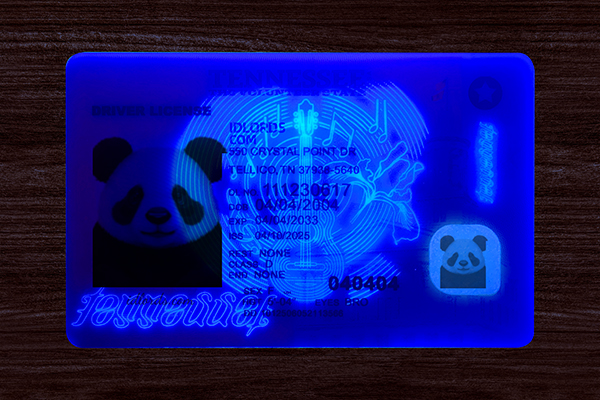
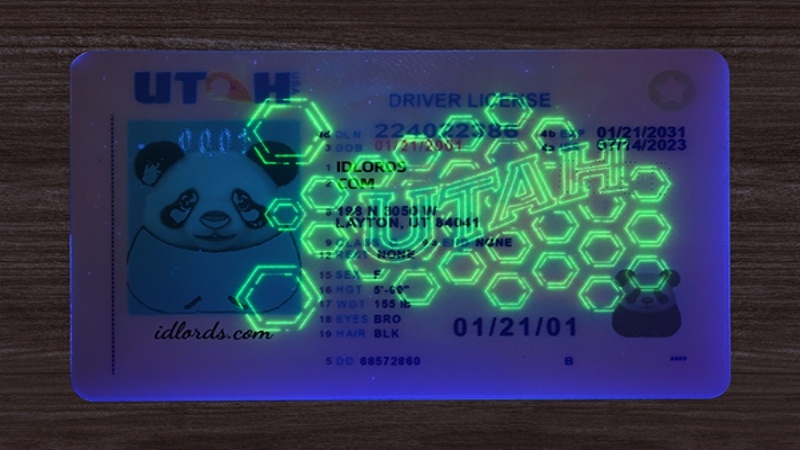
Security Features
Modern ID cards often include several security features.
Examples include:
Holograms
These reflective images help prevent easy copying.
UV Printing
Invisible ink appears only under ultraviolet light.
Microprinting
Very small text is difficult to reproduce with ordinary printers.
Ghost Images
A smaller version of the photo appears elsewhere on the card.
Fine Line Patterns
Complex background designs help improve security.
Laser Engraving
Some cards use laser engraving instead of ink.
This creates permanent information inside the card material.
Printing Technology
Premium ID cards use advanced printing equipment.
Common printing methods include:
- Dye sublimation
- Reverse transfer printing
- UV printing
- Laser engraving
- Digital offset printing
These methods improve image quality and durability.
Scanning Process
The scanning process is simple.
Step 1
The scanner reads the barcode.
Step 2
The scanner decodes the stored information.
Step 3
The software displays the data.
Step 4
The printed information can be compared with the scanned data.
The process usually takes only a few seconds.
Common Applications
Scannable technology appears in many industries.
Examples include:
- Driver’s licenses
- Employee badges
- Student IDs
- Membership cards
- Visitor passes
- Government identification
- Healthcare cards
Many organizations rely on machine-readable cards for faster processing.
Benefits of Scannable IDs
Modern scannable IDs offer several advantages.
Faster Verification
Scanning saves time compared to manual entry.
Better Accuracy
Digital reading reduces typing mistakes.
Improved Security
Advanced printing makes duplication more difficult.
Professional Appearance
Modern printing creates sharper images and cleaner text.
Longer Lifespan
High-quality materials resist daily wear.
How to Identify a High-Quality Scannable ID
When comparing ID cards, look for:
- Clear printing
- Sharp text
- Accurate colors
- High-quality photo
- Proper alignment
- Durable material
- Smooth finish
- Clean barcode printing
A well-made card combines quality materials with precise manufacturing.
Choosing the Right ID Card
The best choice depends on the intended application.
If only visual identification is needed, a standard ID card may be sufficient.
If faster verification and machine-readable information are important, a scannable ID offers additional functionality through barcode technology and advanced security features.
Understanding these differences helps explain why many modern identification systems have adopted scannable technology.
Supporting Premium Scannable ID Technology
If you want to learn more about modern card construction, barcode technology, premium materials, and advanced printing features, explore our Premium Scannable IDs resource for additional educational information and product details.
Frequently Asked Questions
What makes a scannable ID different from a standard ID card?
A scannable ID includes machine-readable information stored in a barcode, while a standard ID may only contain printed details.
What barcode do most driver’s licenses use?
Many driver’s licenses use the PDF417 barcode because it can store more information than traditional barcodes.
Are scannable IDs more durable?
Many scannable IDs use high-quality materials such as composite PVC or polycarbonate, making them more durable than basic plastic cards.
Why do organizations use barcode scanning?
Barcode scanning improves speed, reduces manual data entry, and increases accuracy during identity verification.
What security features appear on modern ID cards?
Common features include holograms, UV printing, microprinting, ghost images, fine-line backgrounds, and laser engraving.
Conclusion
Scannable IDs and standard ID cards may look similar, but they serve different purposes. Standard cards focus on visual identification, while scannable IDs add machine-readable data that supports faster verification and improved accuracy.
Modern identification systems also benefit from advanced materials, high-quality printing, and multiple security features that increase durability and reliability. By understanding these differences, you can better appreciate how today’s ID technology has evolved to meet modern verification needs.
