

Fake driving licenses have become increasingly sophisticated. Modern counterfeiters can replicate fonts, holograms, colors, and even barcodes that appear legitimate at first glance. As a result, many businesses, employers, financial institutions, and security professionals rely on barcode scanners as part of their identity verification process.
But here’s the important question:
Can a barcode scanner actually detect a fake driving license?
The short answer is not always.
While barcode scanners play a valuable role in ID verification, they are only one piece of a comprehensive fraud detection strategy. Understanding what barcode scanners can—and cannot—do helps organizations avoid costly mistakes and improve security.
In this guide, you’ll learn how barcode scanners work, their strengths and weaknesses, and why combining multiple verification methods is the best way to identify fraudulent driver’s licenses.
Understanding Driver’s License Barcodes
Most modern driver’s licenses include a machine-readable barcode printed on the back of the card. In the United States, this is usually a PDF417 two-dimensional barcode, capable of storing large amounts of encoded information.
A barcode may contain:
- Full legal name
- Date of birth
- Driver’s license number
- Address
- Issue date
- Expiration date
- License class
- Restrictions
- State-specific information
When scanned with compatible software, the encoded information is displayed instantly, allowing businesses to compare the digital data with the information printed on the front of the license.
How Barcode Scanners Work
Barcode scanners emit light that captures the barcode image and converts it into digital information.
The verification software then:
- Reads the barcode data.
- Decodes the information.
- Displays the stored details.
- Compares barcode data with printed information.
- Checks formatting standards.
- Detects unreadable or corrupted barcodes.
Some advanced systems can also compare barcode information with government databases, where permitted by law.
Can Barcode Scanners Detect Fake IDs?
The answer depends entirely on how the fake license was created.
Poorly Made Fake IDs
Many counterfeit licenses contain incorrect barcode formatting or invalid encoded information.
A barcode scanner may detect:
- Missing data
- Invalid fields
- Incorrect formatting
- Corrupted barcode structure
- Unreadable barcode
These fake IDs are usually identified quickly.
High-Quality Counterfeit Licenses
Professional counterfeiters often generate barcodes that contain believable information.
In these situations, the scanner successfully reads the barcode because technically it contains valid data.
However, this does not mean the driver’s license is authentic.
If the counterfeit barcode contains fabricated but correctly formatted information, a standard barcode scanner may not recognize the fraud.
What Barcode Scanners Cannot Detect
This is where many organizations misunderstand barcode verification.
A standard barcode scanner generally cannot determine whether:
- The physical card is genuine.
- Security holograms are authentic.
- UV security features exist.
- Microprinting is legitimate.
- Laser engraving is genuine.
- Ghost images are authentic.
- Polycarbonate construction is original.
- The ID was stolen.
- The identity belongs to the person presenting it.
In other words, barcode scanners verify data readability—not document authenticity.
Common Ways Fraudsters Bypass Barcode Verification
Counterfeit technology continues to evolve.
Some criminals create fake licenses by:
Copying Barcode Data
They clone barcode information from a real license onto a counterfeit card.
The barcode scans successfully even though the physical license is fake.
Generatiolen Identity Information
Fraudsters may encode genuine personal information obtained through identity theft.
The barcode appears legitimate because the data itself is real.
Matching Printed and Barcode Data
Advanced counterfeit licenses ensure the printed information matches the barcode exactly.
Since both match, simple barcode verification cannot detect the fraud.
Why Businesses Should Never Rely Only on Barcode Scanners
Barcode scanners are useful—but they should never be the only verification method.
Relying solely on barcode scanning increases the risk of:
- Identity fraud
- Underage access
- Financial fraud
- Employment fraud
- Account takeover
- Regulatory violations
Instead, businesses should implement layered identity verification.
Additional Security Checks That Improve Fake ID Detection
A comprehensive verification process combines barcode scanning with physical and digital inspection.
Visual Inspection
Inspect:
- Fonts
- Alignment
- Print quality
- Color consistency
- Lamination
- Surface texture
Poor craftsmanship often reveals counterfeit cards.
Hologram Verification
Many official driver’s licenses include holographic overlays that change appearance under different viewing angles.
Counterfeit holograms often look flat or blurry.
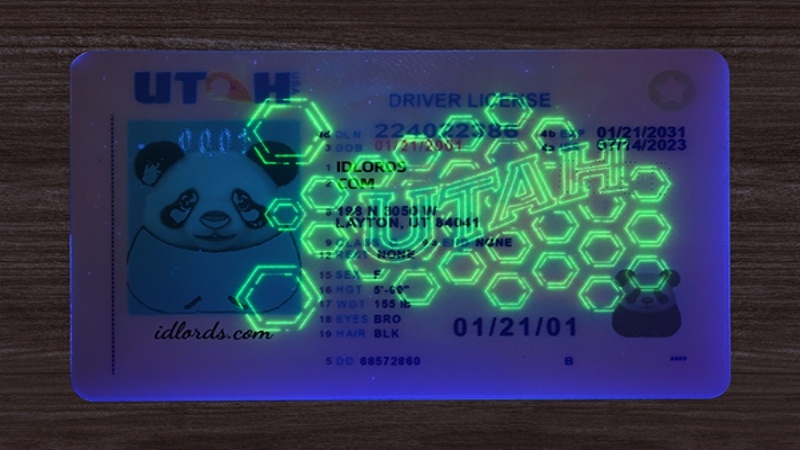
UV Light Inspection
Many states include ultraviolet security elements invisible under normal lighting.
A UV flashlight quickly exposes missing security features.
Microprinting Examination
Tiny printed text is extremely difficult for counterfeiters to reproduce accurately.
Magnification often reveals blurred or unreadable microprinting.
ID Authentication Software
Professional ID authentication systems examine:
- Barcode structure
- Security templates
- State-specific layouts
- Image analysis
- Document consistency
- Tampering indicators
These systems provide much stronger fraud detection than barcode scanners alone.
Industries That Benefit from Barcode Verification
Barcode verification is widely used in:
- Banks
- Hotels
- Car rental companies
- Employers
- Government agencies
- Healthcare providers
- Casinos
- Nightclubs
- Retail stores
- Age-restricted businesses
For these industries, barcode scanning improves efficiency but should always be paired with additional authentication measures.
Best Practices for Detecting Fake Driving Licenses
Organizations can strengthen their verification process by following these recommendations:
- Train employees to recognize security features.
- Use high-quality barcode scanners.
- Verify printed information matches barcode data.
- Inspect holograms and UV markings.
- Check expiration dates carefully.
- Compare the ID photo with the individual.
- Use professional ID authentication software whenever possible.
- Stay informed about new counterfeit techniques.
FAQs
Can every driver’s license barcode be scanned?
Most modern driver’s licenses include a machine-readable barcode, although barcode formats and stored data vary by state or country.
Does a successful barcode scan prove the license is genuine?
No. A successful scan only confirms that the barcode contains readable data. It does not verify that the physical license is authentic.
Can fake IDs have working barcodes?
Yes. High-quality counterfeit licenses often include functional barcodes that can be read by standard scanners.
What is the biggest limitation of barcode scanners?
Barcode scanners cannot verify physical security features such as holograms, UV printing, laser engraving, or document materials.
What is the best way to detect fake driving licenses?
The most effective approach combines barcode scanning, visual inspection, security feature verification, employee training, and advanced ID authentication technology.
Conclusion
Barcode scanners are an important tool in modern identity verification, but they are not designed to detect every fake driving license. While they can quickly read encoded information and identify some poorly made counterfeits, sophisticated fake IDs often contain functional barcodes that appear legitimate during a standard scan.
For organizations that rely on accurate identity verification, barcode scanning should be viewed as the first step—not the final decision. Combining barcode verification with visual inspection, security feature analysis, and advanced authentication technology provides significantly stronger protection against identity fraud.
If you want to learn more about recognizing counterfeit licenses, identifying security features, and understanding the latest fake ID techniques, explore our comprehensive Fake Driving License Guide for additional insights and best practices.
