
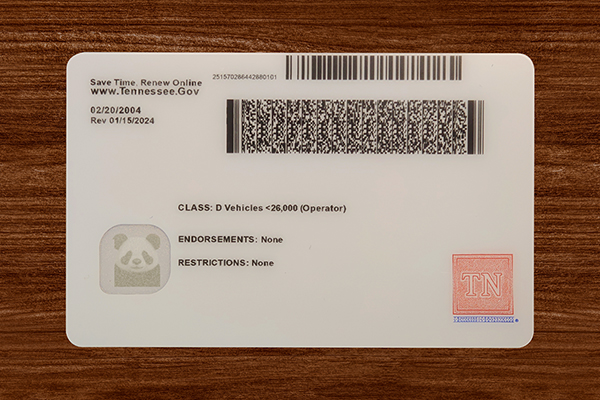
Identity verification has changed dramatically over the years. Today, most modern identification cards rely on scanning technology rather than visual checks alone. As a result, many people ask a common question:
What is a scannable ID, and how do scannable fake IDs work?
This guide explains the concept in a clear, educational way. It focuses on how scannable IDs function, the technology behind them, and why accuracy and structure matter—without promoting misuse.
What Is a Scannable ID?
A scannable ID is an identification card that contains machine-readable data. This data can be read by scanners, readers, or verification systems to display stored information digitally.
Unlike basic visual IDs, scannable IDs rely on embedded data formats such as:
- Barcodes
- Magnetic stripes
- Smart chip elements (in advanced IDs)
When scanned, the system decodes the stored information and presents it on a screen for verification.
Why Scannable IDs Are Widely Used
Scannable IDs are popular because they improve speed, consistency, and accuracy. Instead of manually checking dates or details, systems can instantly verify information.
They are commonly used for:
- Age verification
- Access control
- Identity confirmation
- Record matching
- Security screening
Because of these benefits, scanning technology has become a standard feature in modern identification systems.
Common Types of Scannable ID Technology
Scannable IDs work using specific data-encoding methods. Each method serves a different purpose.
1. PDF417 Barcodes
PDF417 is a two-dimensional barcode widely used on identification cards. It stores structured data in a compact format.
Key characteristics include:
- High data capacity
- Error correction capability
- Fast scanning speed
- Compatibility with many scanners
Most scannable IDs rely on this barcode format due to its efficiency and reliability.
2. Magnetic Stripes
Magnetic stripes store data in tracks that can be read by swipe readers.
They are often used for:
- Legacy systems
- Access cards
- Older verification devices
Although less advanced than barcodes, magnetic stripes are still common in many environments.
3. Embedded Chips (Advanced IDs)
Some modern IDs use embedded chips that store encrypted data. These are typically found in official documents and high-security systems.
This technology is more complex and not commonly replicated for educational or reference purposes.
How Scannable Fake IDs Work (High-Level Explanation)
Scannable fake IDs are designed to replicate the structure of real scannable IDs, not the authority behind them. From a technical perspective, they focus on format rather than legitimacy.
At a high level, they work by:
- Using a readable barcode or stripe format
- Following standard data placement rules
- Matching visual layout and spacing
- Presenting data in a scanner-recognizable structure
When scanned, the system reads the data format and displays information because it recognizes the structure, not because the ID is authentic.
Important: Structure and legitimacy are not the same. Scanning confirms format, not legal validity.
Why Structure Matters More Than Appearance
Many people assume scannable IDs are only about looks. However, structure plays a much bigger role.
A well-structured scannable ID includes:
- Proper data sequencing
- Correct field placement
- Logical formatting
- Standard encoding patterns
If the structure is incorrect, scanners may fail to read the ID, even if it looks realistic.
Scannable IDs vs Non-Scannable ID
The difference between scannable and non-scannable IDs is significant.
| Feature | Scannable ID | Non-Scannable ID |
| Machine-readable data | Yes | No |
| Barcode or stripe | Present | Absent |
| Scanner compatibility | High | None |
| Verification speed | Fast | Manual |
| Data consistency | Structured | Visual only |
This comparison explains why scannable formats dominate modern verification systems.
Common Myths About Scannable Fake IDs
There are several misunderstandings around scannable fake IDs.
Myth 1: “Scanning means it’s real.”
Scanning only means the data format is readable. It does not confirm authenticity or legality.
Myth 2: “All scanners work the same.”
Different scanners read different formats. Compatibility varies widely.
Myth 3: “Visual realism guarantees success.”
Even a perfect visual design can fail if the data structure is incorrect.
Understanding these myths helps clarify how scanning systems actually work.
Educational and Reference Use Cases
Scannable ID replicas are often discussed in educational or professional contexts, such as:
- Demonstrating how verification systems function
- Training staff on scanner behavior
- Studying document security design
- Visual references for designers and developers
- Film, media, and entertainment props
In these contexts, the focus is on learning and demonstration, not real-world identity use.
Legal Awareness and Responsible Understanding
Laws surrounding identity documents vary by country and region. Replica or scannable IDs are typically intended for novelty, educational, design reference, or entertainment purposes only.
Using any ID to misrepresent identity or bypass verification systems may result in serious legal consequences. Always understand local regulations and act responsibly.
Final Thoughts
Understanding what a scannable ID is and how scannable fake IDs work starts with separating structure from legitimacy. Scanning technology focuses on data formatting, not legal authority.
By learning how barcodes, magnetic stripes, and verification systems function, users gain valuable insight into modern identity systems. Education, transparency, and responsible awareness are essential when discussing or researching scannable IDs.