
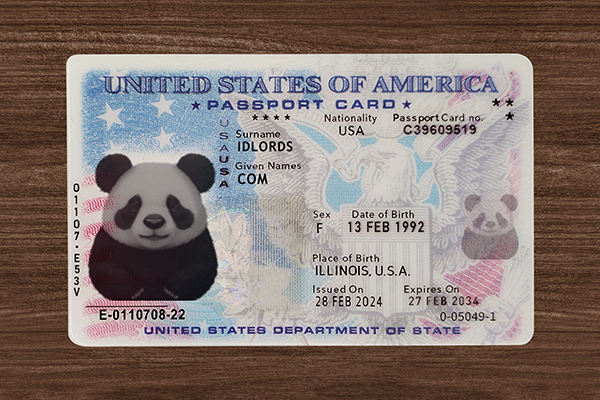
Identity documents, including passports and national IDs, play a crucial role in verification, travel, and administrative processes worldwide. Increasingly, people search online for fake passport and identity documents, particularly those described as high-resolution IDs, to understand design standards or for educational and display purposes.
In this article, the concept of high-resolution replicas will be explored. You will also learn why visual accuracy is critical, how resolution impacts quality, and what factors define a high-quality replica.
What Are High-Resolution Identity Document Replicas?
High-resolution identity document replicas are non-official reproductions created to visually resemble real documents. The term “high-resolution” refers specifically to clarity, image sharpness, and design precision, rather than authenticity or legality.
These replicas are often used for:
- Design reference in graphic or ID production
- Educational demonstrations on document verification
- Media and entertainment production, such as films and TV shows
- Display or novelty collections
Because real identity documents contain intricate details, high-resolution printing ensures that replicas maintain visual credibility.
Why Visual Accuracy Matters in Passports and IDs
Passports and official IDs are among the most visually complex printed documents. They often include:
- Microtext and fine line patterns
- Layered backgrounds with gradients
- Precisely placed typography
- Embedded seals and emblems
- Structured layout alignment
Consequently, low-quality replicas often appear blurry, misaligned, or unrealistic. In contrast, high-resolution replicas preserve sharp text, accurate spacing, and clear images, making them more suitable for reference or display purposes.
Key Components of High-Resolution ID Replicas
High-resolution does not only refer to the printing process. It encompasses several crucial design elements:
1. Crisp Print Quality
Text and numbers must remain legible even at small sizes.
2. Sharp Images
Photographs, logos, and emblems should be clean and free of pixelation.
3. Color Fidelity
Gradients, backgrounds, and patterns must be accurately reproduced.
4. Defined Edges
Borders, icons, and layout elements should be clear and distinct.
These components together create a realistic appearance that closely mimics authentic documents.
Types of Replicated Identity Documents
Several types of documents are commonly replicated for educational, media, or display purposes:
Passports
Replicas focus on cover design, page layout, and photograph placement.
National ID Cards
Plastic or PVC cards that follow official dimensions and layouts.
Secondary IDs
Other identity documents, such as residence permits or reference cards, which are used for study or display purposes.
Each type has unique design challenges, and high-resolution printing ensures maximum visual fidelity.
How Resolution Impacts Layout Precision
Resolution directly influences the accuracy of the design. Low-resolution replicas often suffer from:
- Blurred text
- Misaligned elements
- Distorted background patterns
- Unclear logos and symbols
By contrast, high-resolution replicas maintain correct proportions, alignment, and overall design integrity, making them visually reliable for educational or media applications.
High-Resolution Replicas vs Low-Quality Copies
The differences between high-resolution replicas and low-quality reproductions are significant:
| Feature | High-Resolution Replicas | Low-Quality Copies |
|---|---|---|
| Text clarity | Sharp & readable | Blurry or faded |
| Image quality | Detailed & crisp | Pixelated |
| Color accuracy | Balanced & realistic | Washed out |
| Layout alignment | Correct & precise | Misaligned |
| Overall realism | High | Poor |
Clearly, high-resolution replicas are far superior in both appearance and functional use as educational or reference tools.
Popular Reasons for Searching Fake Passport & ID Replicas
The interest in these documents is fueled by multiple factors:
- Increased curiosity about document design and security features
- Demand for props in media, entertainment, and theatrical productions
- Educational purposes for law, security, or design studies
- Collection and display for novelty or academic study
As a result, search queries such as high-resolution ID replicas, passport layout reference, and identity document replicas continue to rise.
Educational Value of High-Resolution Replicas
From an educational perspective, high-resolution replicas can effectively demonstrate:
- Standardized layout structures of passports and IDs
- The importance of alignment, typography, and spacing
- How visual security features support verification systems
When used responsibly, these replicas allow learners and creators to analyze document design without violating legal restrictions.
Legal Awareness and Responsible Use
It is crucial to note that real passports and identity documents are strictly protected by law in most countries. Replica materials should only be used for educational, media, display, or design reference purposes.
Misuse of any identity document, even a replica, for fraud, travel, or official verification can result in serious legal consequences. Users should always ensure that their use complies with local regulations.
Conclusion: Fake Passport and Identity
High-resolution fake passport and identity document replicas are designed to replicate visual accuracy, not to provide official functionality. Their main value lies in clarity, layout precision, and realistic design, which are essential for educational, media, or display purposes.
By understanding the difference between low-quality reproductions and high-resolution replicas, users can make informed decisions while respecting legal boundaries. Proper use of these materials ensures they serve as valuable learning tools and reference objects, without violating laws.